Blog
When strip theory limits perception of ship motion performance
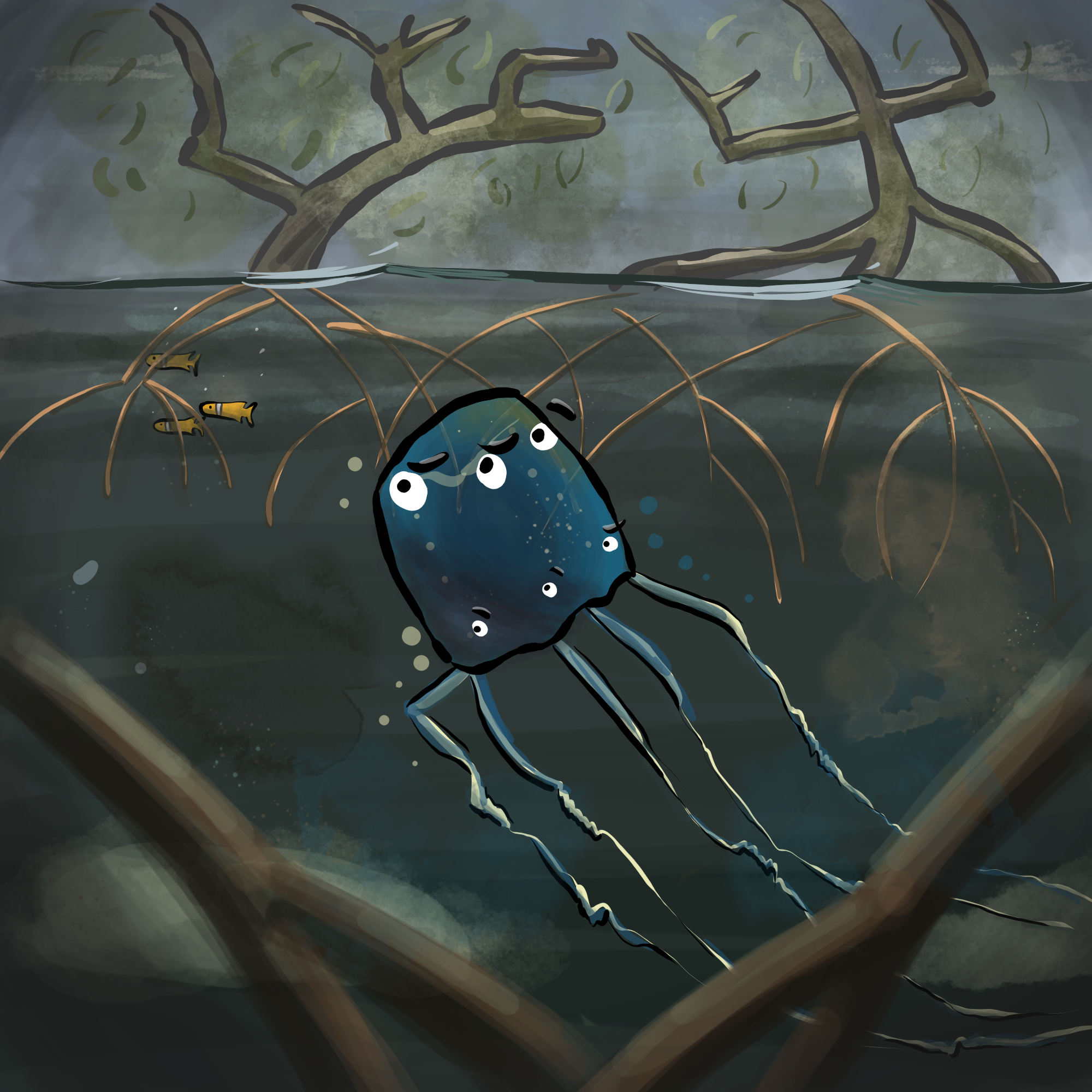
Box Jellyfish have something no other jellies have: image-forming eyes. These eyes are serious hardware, too, and more than a few light-sensitive cells. These eyes have lenses, corneas, and retinas. And not just one or two, but a whopping 24 of them arrayed around their bodies. This is particularly surprising because jellyfish are simple creatures that have more in common with a floating wet bag than with much more sophisticated animals with vision capability. It’s even more surprising when you realize that they don’t even have a central brain with which to process information and work with these eyes. Yet Box Jellyfish have found a way to use what they see to survive and thrive in their world. And rightly so because their world is quite different than most other jellies that float and swim in the open ocean.
Box jellyfish live in the tangled world of mangrove swamps. This might sound like a dangerous place to get tangled up for something like a jellyfish – and it is. Yet there are advantages: mangrove swamps offer protection from larger predators, and there’s lots of food around in these lush coastal areas, too. But they are still challenging to navigate because roots and obstacles are everywhere. And being a swamp, the shoreline is often also quite complicated to follow when getting around, too. This is when the Box Jellyfish eyes come in.
All their eyes are generally oriented to look upward. This way, they can sense when they are following the coast properly. From the amount of sky they can see, through the trees, they can also make sure they aren’t getting too close to shore, or too far out of their comfort zone, away from the swamp and out to sea. Most Jellyfish that live in the open ocean don’t have anything that gives them a visual sense. Ordinary jellyfish couldn’t live in a place like a swamp without vision to get around. In this way, these sophisticated eyes give the Box Jellyfish an advantage through perception.
This idea of perception is what we all seek to unlock understanding. With that understanding, we can then get to the next step. Likewise, in the world of ship motion prediction, we use numerical models to build an understanding of what to expect in reality. But the basis of these models has limitations, and when you drift into those limitations, uncertainty starts to rear its ugly head. If there’s too much uncertainty, your perception is blinded, and you can get lost in a tangled swamp of confusion. Yet, if you can learn when to get the most out of your tools, the design process will thrive. In this article, we’re going to talk about the limitations of ship motion prediction tools based on strip theory, and when you need to be careful about trusting the results of analysis with them.
What we’re going to cover is the challenges of the effects of strip theory seakeeping codes on evaluating:
- Shallow draft
- Forward speed
- Bow and stern boundary
First, we’re going to cover the effects of shallow draft.
Ocean waves interact differently with hulls with shallow or deep drafts
A deeper draft means a larger footprint in the water. This tends to create a barrier to incident ocean waves. And when there’s a barrier, it means there’s more deflection involved as wave energy moves around this barrier. This is essentially producing a greater diffracting effect around the hull. However, the opposite effect happens when a hull has a shallow draft.
Rather than go around, wave energy tends to go under. Another way of thinking about this is that the hull footprint in the water is thin enough to skirt over the top of the waves. I am not talking about a planing vessel, but just that the hull produces a lack of a deep barrier diffracting waves in the same way as a deep draft. But how deep is deep?
The beam to draft ratio, B/T can give insight
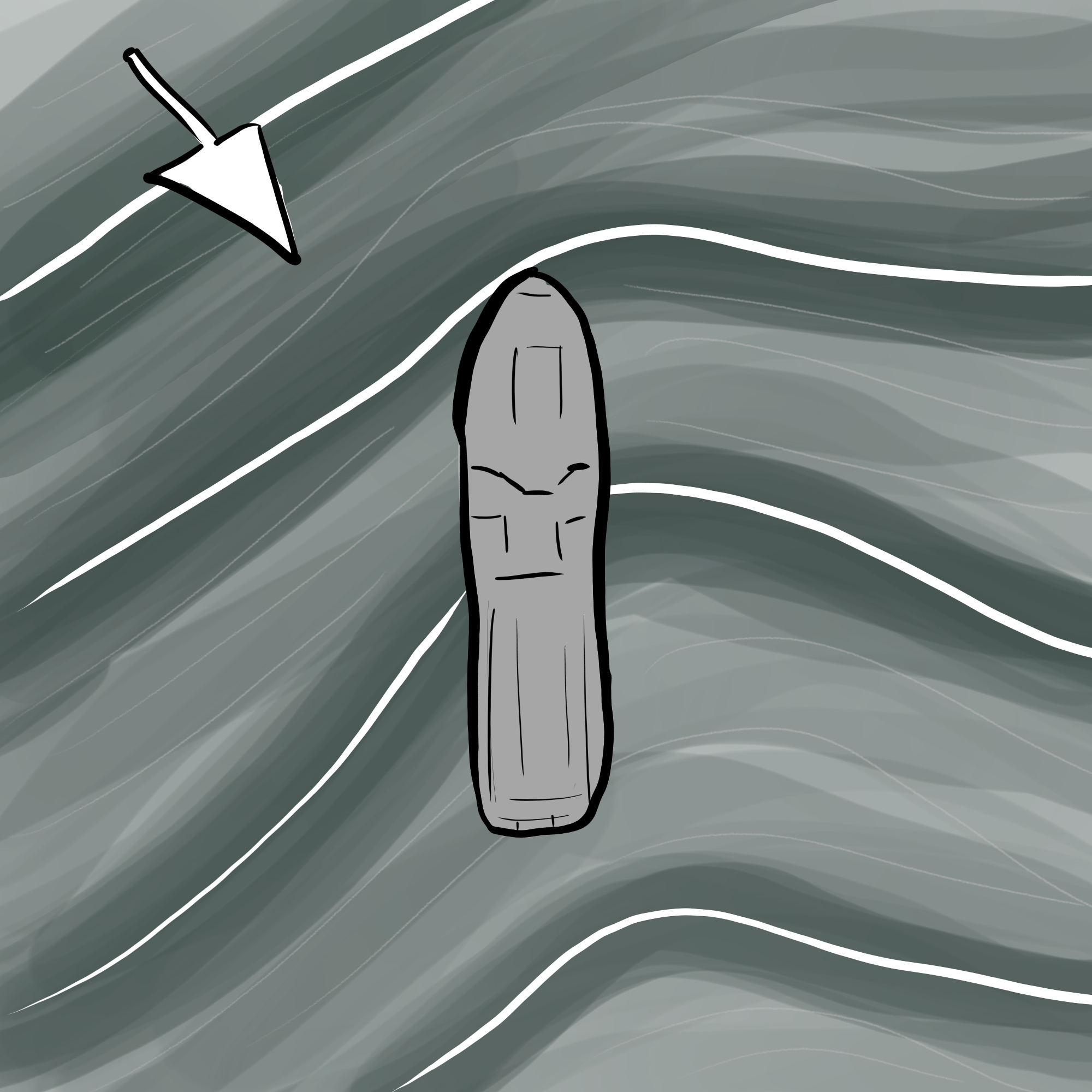
One indicator of how deep the draft is and when these conditions may be problematic is by comparing the draft to the beam of the vessel. A larger beam to draft ratio, B/T, indicates when this starts to be a concern. A B/T greater than 3 or 4 might indicate a shallow draft condition, though there isn’t an obvious agreed threshold. Now, what does this kind of physical effect mean for a strip theory approach to solving hydrodynamics?
This means the interaction between the hull and incident waves is highly three dimensional
This is especially the case in directions other than pure beam sea condition. If you use a strip theory approach to solving the hydrodynamic interaction of the hull with incident waves, you have to be especially careful that you find a way to handle wave energy and pressure effects across all the 2D slices of the ship hull. This is especially the case in head or stern seas, or bow or stern quartering conditions. But what about deeper draft vessels?
Strip theory doesn’t introduce as many issues with deeper draft vessels
This is because each individual strip will indicate a strong diffracting component, deflecting waves away from the hull. This creates more of a two dimensional effect in how the waves interact with the hull. This means there is less uncertainty because, in reality, wave energy and momentum would be deflecting around the hull more, meaning less wave energy and momentum leaking under the hull. This suggests that it is more compatible with the assumptions made by a strip theory approach. Now, a shallow draft hull is not the only circumstance when wave energy and momentum propagate across the hull. There’s another important consideration that strip theory can struggle with. This brings us to the second point on the forward speed condition.
Seakeeping codes that consider forward speed introduce a missing ingredient in wave hull hydrodynamic interaction
That missing ingredient is a boundary condition that changes the nature of the calculation process. This boundary condition is the steady forward velocity of the entire hull in the water. What this really means is that as the entire hull is moving at a steady forward speed, it creates new forces that change the diffracting effect of ocean waves around the hull. The thing about this velocity boundary condition is that it needs to be applied across the entire hull to properly influence the wave-hull hydrodynamic interaction. So what are the implications for the strip theory algorithm?
The problem then arises in the way that strip theory evaluates the hydrodynamics of strips along the hull in isolation from each other
The forward velocity condition is a bulk effect of the hull moving through the water. It means waves are affected by an aggregate effect of the entire hull moving at a forward velocity in the water. Because strip theory algorithms calculate wave-hull interaction in isolated 2D slices, they don’t account for this forward speed effect on diffraction forces. Some strip theory algorithms include additional terms to account for hydrodynamic interactions between 2D slices, but they require careful consideration and validation to ensure accuracy. This isn’t the only issue that arises when calculating hydrodynamic effects in isolated strips, though. This brings us to the third and final point on bow and stern effects.
Strip theory is oriented in evaluating lateral strips of the hull
This means there’s uncertainty in how to deal with the hydrodynamics of the “ends” of the ship that affect longitudinal motion – in other words, the bow and stern forms. For a long and slender ship, this may not be a driving factor when solving the ship motion prediction problem. However, when ships are less slender, there isn’t an obvious natural way for strip theory algorithms to factor in the hydrodynamics of the bow or stern shape of the vessel. Indeed, in a head, quartering, or following sea condition, these forms of the ship can have an important influence on motions because of the three dimensional way they affect diffraction and wave radiation effects. And the less slender the vessel, the more important these effects become.
An alternative approach to evaluate wave-hull interaction is a 3D panel method
A panel method, like the ProteusDS ShipMo3D toolset, solves the entire interaction between the hull and the wave field without assumptions to simplify the problem like in strip theory. Generally, panel methods should be considered when evaluating any ship with a length to beam ratio of less than 6. However, regardless of this, if the draft is shallow enough, as in barges or heavy transport ships, a panel method may be more appropriate given these other considerations.
Let’s look at a few examples
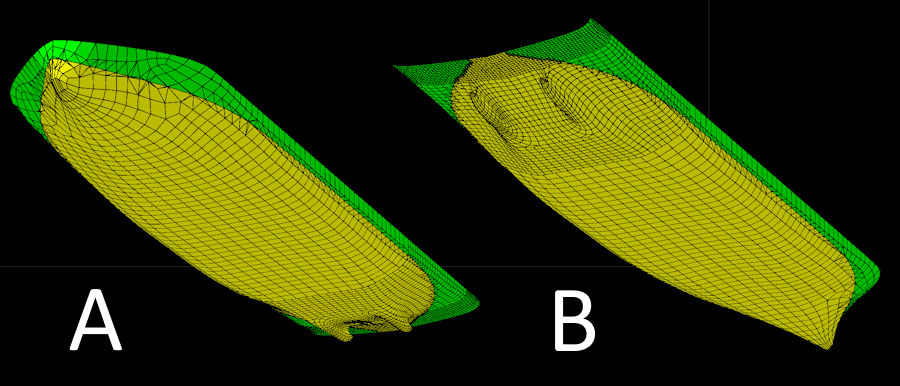
Barges and flat-bottomed vessels often have shallow drafts relative to the length or beam of the vessel. Heavy lift and transport vessels are similar.
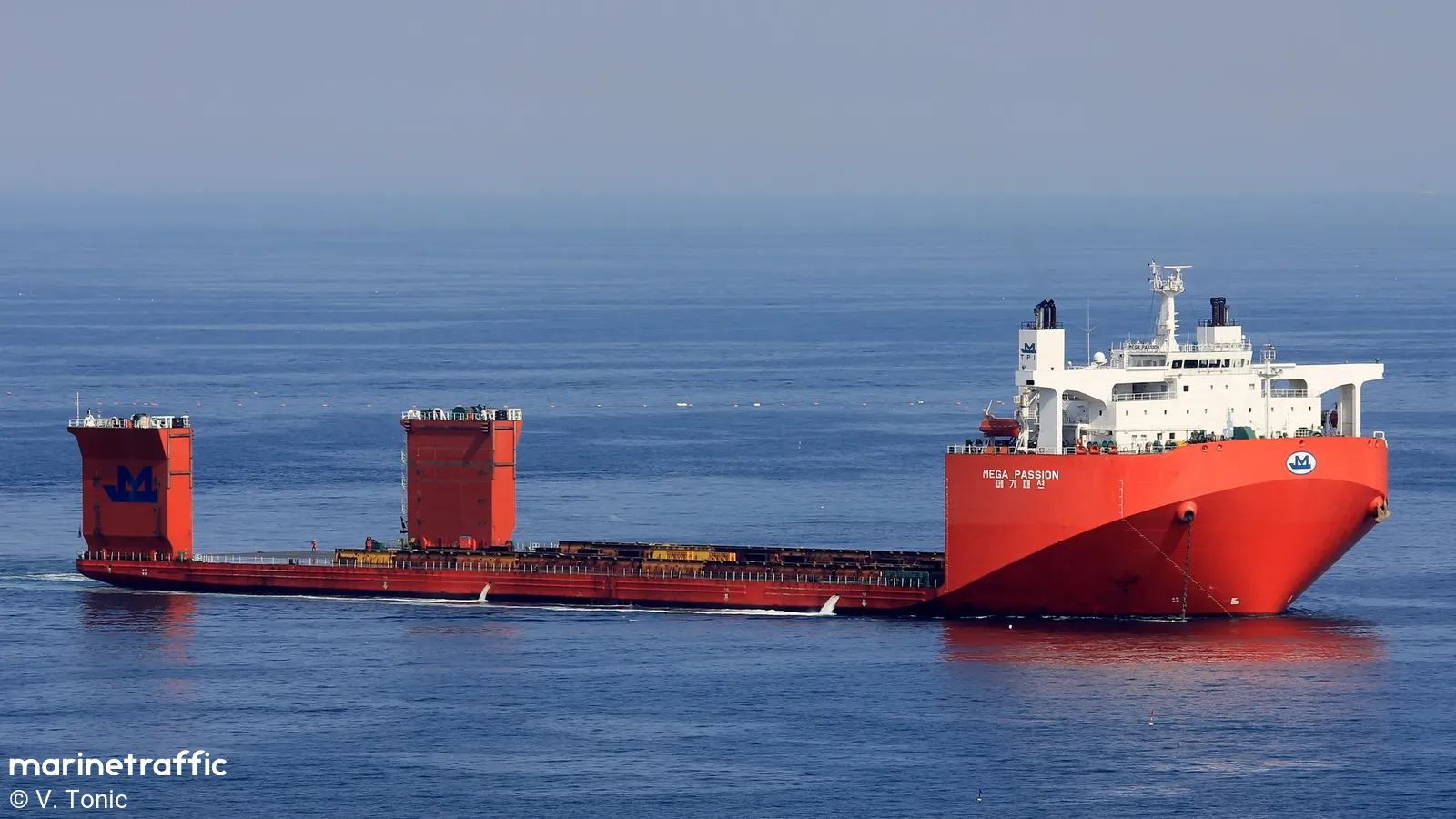
Mega Passion
This semi-submersible heavy transport ship has a length of 203m, beam of 63m, and nominal draft of 8m. The length to beam ratio is 3 and beam to draft ratio is 7.6.
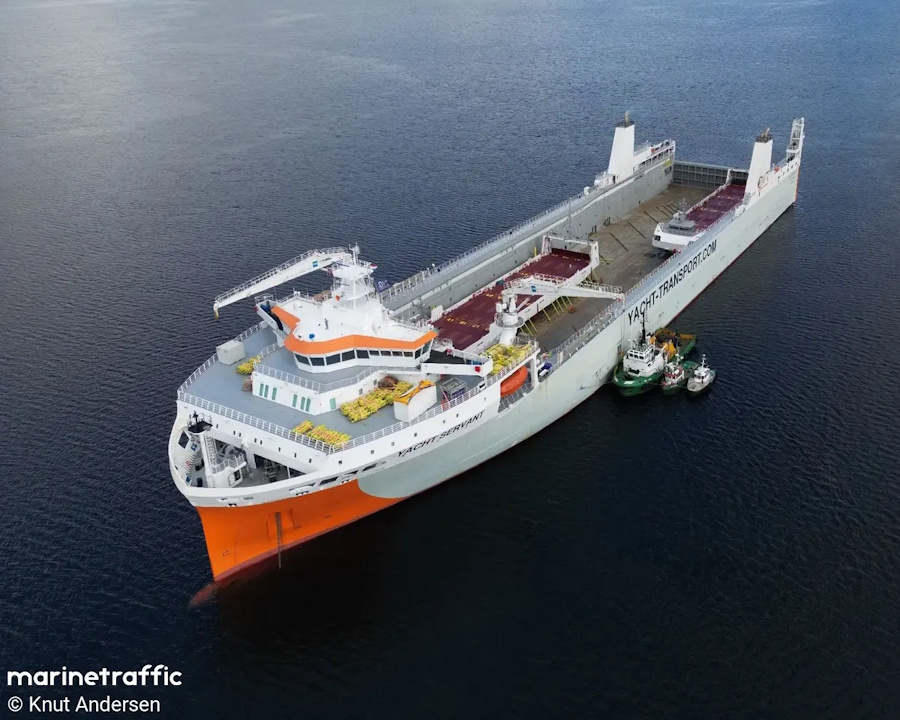
Yacht Servant
This multi-vessel carrier has a length of 214m, beam of 46m, and a draft of 5.2m. The length to beam ratio is 4.6 and beam to draft ratio is 8.7.
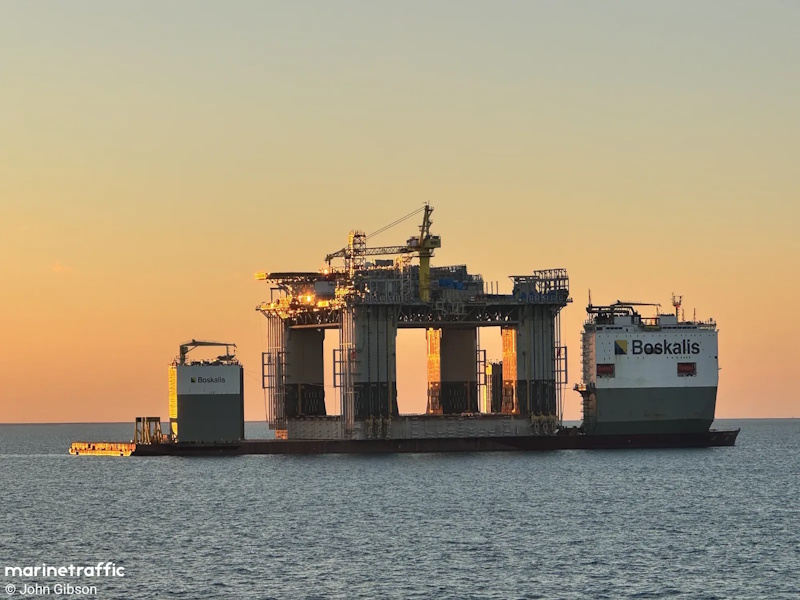
BOKA Vanguard
This semi-submersible heavy lift and transport ship, the largest in the world, has a length of 275m, beam of 79m, and nominal draft of 11m. The length to beam ratio is 3.5 and beam to draft ratio is 7.
It’s summary time
We covered a few facets of the limitations of strip theory methods in ship motion prediction, and now it’s time to summarize. Generally, strip theory algorithms are intended for use on slender hull forms. However, beyond this guidance, there may be circumstances when strip theory might introduce more uncertainty than other approaches like panel methods. Many of the reasons for these uncertainties are the way strip theory algorithms calculate wave-hull interaction in isolated 2D strips and don’t account for interactions between these sections. This includes hulls with relatively shallow drafts, in which wave energy can propagate under the hull. Another aspect is the forward speed condition, in which the ship hull velocity creates a bulk effect when interacting with the wave field around the hull. Finally, strip theory does not naturally account for the effects of the “ends” of the ship, namely, the bow and stern. In all cases, there’s more uncertainty when evaluating ship motion in longitudinal directions like head or following seas, or any quartering condition, compared to beam seas. Alternative approaches like 3D panel methods that solve the entire hull-wave interaction together are a viable alternative in these kinds of scenarios, beyond the consideration of slenderness alone.
Next step
We mentioned the ProteusDS ShipMo3D toolset uses a panel method approach in evaluating wave-hull interaction. You can see how the process works in bringing your own ship hull into the software as the starting point for doing your own wave-hull interaction and seakeeping analysis. Click the image to see the YouTube video tutorial.