Blog
Know your fin stabilizers: sizing fins for zero speed
In parts 1 and 2 of this series, we gave a broad overview of fin stabilizer equipment suppliers and a few pointers for setting fin parameters for forward speed applications. But a key distinction in fin stabilizer technology is zero speed capability. Zero speed fins have the capacity to control motion with no forward ship speed. All zero speed fin stabilizers can also provide forward speed performance. This means you can start sizing fins with forward speed considerations. But you need more information to size fins for a zero speed condition. Fortunately, there are only a few more steps to establish additional zero speed fin parameters with realistic inputs based on commercially available technology. In this article, we’re going to cover:
- actuation power
- angle range
- fin balance
First, we’re going to cover actuation power.
Fin stabilizers often have two primary components: the fin and the actuator
What this means is that there are two parts to establishing fin details: sizing the fin, and then sizing the actuator. Now, the fin itself doesn’t need to be a precise size. Of course, hydrodynamic motion control performance is affected by the size and shape of the fin. And generally it makes sense to have a certain size range of fin depending on what actuator size you have. But once you are in the right range of size, there’s wiggle room on the fin particulars. The actuator, on the other hand, is the exact opposite.
The actuator system has many specifics that produce a given actuation force and power. There’s a lot of mechanical detail in how the system takes either hydraulic or electric power and turns it into fin rotational motion. Typically, equipment suppliers manufacture a range of distinct actuator system sizes, each with increasing power levels. Generally, the larger the ship, the larger the actuator system and fin size. So what does this mean for estimating parameters for a seakeeping analysis?
Zero speed motion control is directly related to actuation power
Actuation power is what drives fin paddling motion when the ship is at rest. The intensity of the paddling motion then directly links to the resulting hydrodynamic resistance and motion control. As a result, it’s a key input for assessing zero speed fin stabilizer performance. So where do you find information on actuator capability?
Sometimes the actuator power level is provided by the equipment supplier. But the challenge is that it’s not always obvious or publicly available information. However, the power rating is not always the same thing as the actuation power needed for a zero speed assessment. Typically, power rating is the maximum possible effort from the actuation system. During zero speed mode, peak actuator power is only needed for a fraction of a second when accelerating the fin from rest. On the other hand, when the fin rotates from one extreme to another, the actuation power is some fraction, perhaps 50-75%, of maximum capacity. Further to this, the ProteusDS ShipMo3D toolset input is the power at the fin stabilizer axis itself, so some accounting for friction and transmission losses is needed. But what if you can’t find any details on actuation power?
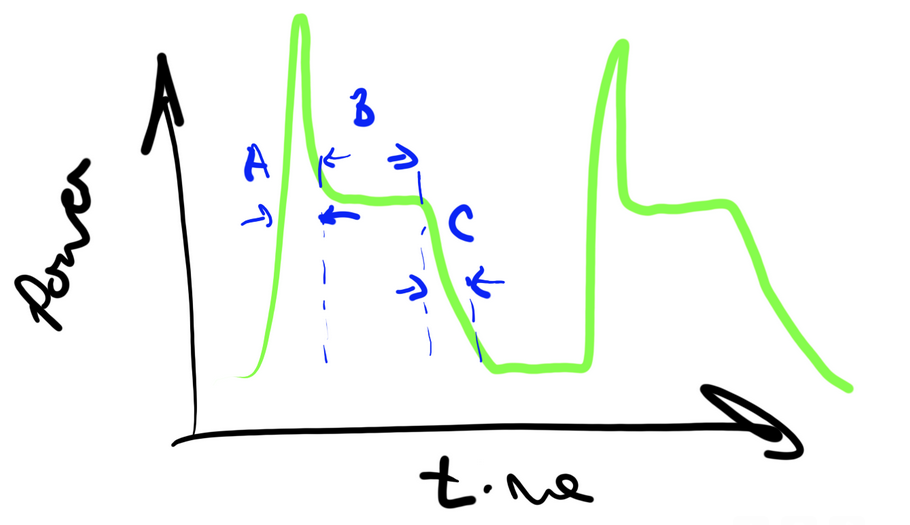
A crude rule of thumb can help with an initial guess at actuation power
This is meant for an initial starting point, just to enable quick evaluations as early as possible. Based on a wide range of monohulls with fin stabilizer systems, an initial first guess is:
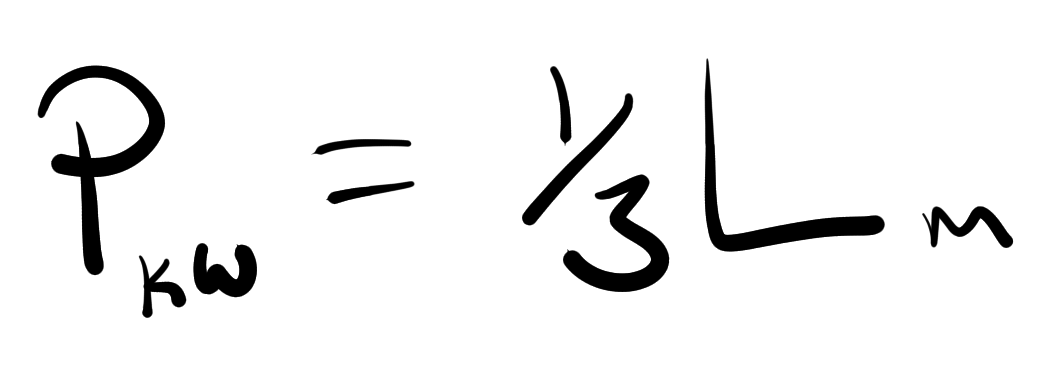
This shows the actuation power at the fin in kW is 1/3 of the ship length in meters. This isn’t meant to be a general rule but rather a starting ballpark number for monohull ships in the range of 30-100m. Some equipment suppliers will often have recommendations with power numbers higher and others lower than this. Regardless, the actuation power is the first component of zero speed motion control capacity, as it drives the intensity of paddling motion. But the second component is how much the fin swings while paddling. This brings us to the second point on fin angle range.
Angle range is the envelope of zero speed paddling motion
As the fin sweeps through one extreme angle to another, hydrodynamic drag forces create resistance to roll motion. So generally, the larger the fin angle range, the more motion control capacity there is. Yet it still depends on having adequate actuation power to be effective. Nevertheless, the fin angle range is a crucial operating parameter for a seakeeping assessment. Like actuation power, it is another parameter based on equipment supplier specific details. Often, this is publicly available information, yet it is not always easily to find.
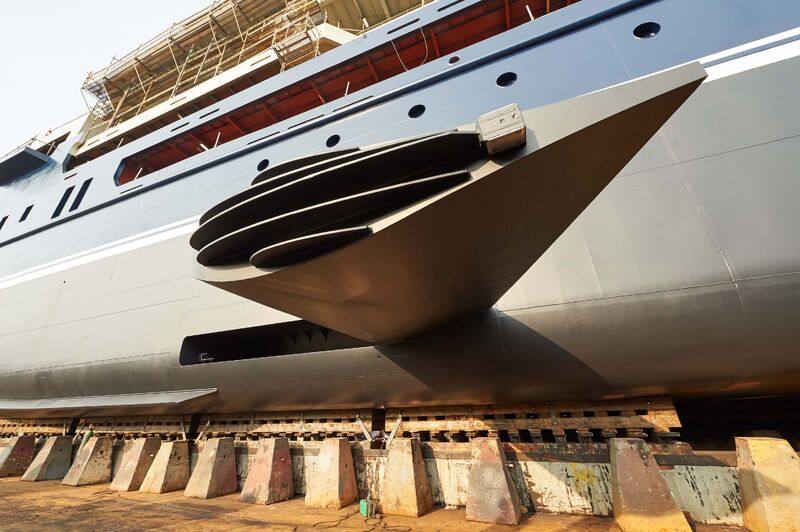
When there’s no information available, a common starting point is 35 degree deflection – in other words, a sweep of 70 degrees. For long aspect ratio (i.e. long span) fins, this might be 50% higher, in the range of 40-60 degree deflection, or 80-120 degree sweep. Angle range and actuation power are the main controlling parameters of zero speed fin performance, but there’s another parameter that helps refine the performance estimate. This brings us to the third and final parameter of fin balance.
Fin area balance is a ratio of area in front and behind the actuator
Because area in front of the actuator tends to fight against hydrodynamic motion control, the idea is to have a lower range of fin balance. It’s not possible to get it perfectly to zero because of structural strength requirements. The real trick is to determine what a realistic value is to use, inspired by commercially available components. So where can you find information on fin balance? Fin balance may often be right on the brochure. For example, Quantum Stabilizers QC3600 P-series fins all have fin balance on them. An alternative to this is if there is a scale drawing of the fin that shows some indication of the actuator location. This can be used to roughly estimate how much area is ahead and how much is behind given the fin shape. Without a precise given number, a rough visual estimate might be the easiest way to work, especially if the fin has a shape more complex than a rectangle. There’s also a rule of thumb if there’s no other information available.
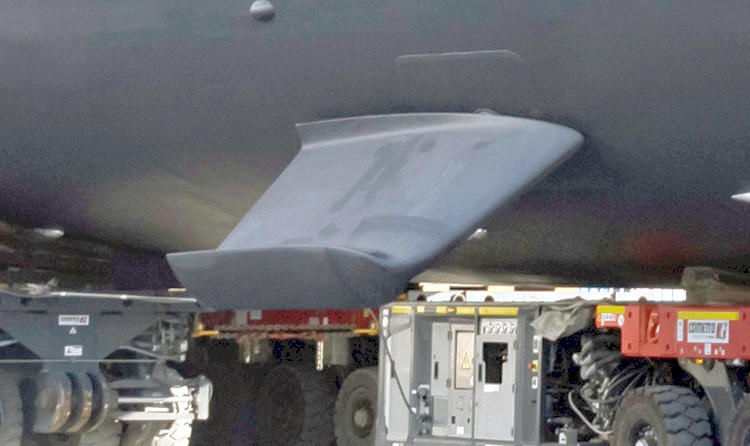
Another crude rule of thumb is that fin balance is typically 17-20%
This is not a universal number, but it’s seen across a range of fin products and could be useful as a rough starting point. Once you have a number for fin balance, this needs to be translated into actuator distance from the leading edge if you are using a seakeeping analysis tool like ProteusDS. The distance of the fin actuator axis from the leading edge, a, for a rectangular shaped fin is:
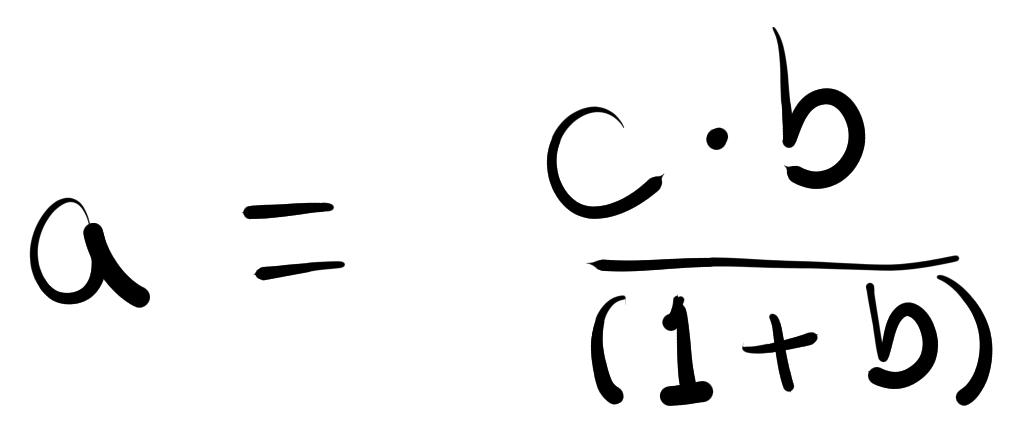
With chord c and fin balance b. For example, a rectangular fin with 2m chord and 20% balance would mean an actuator distance from leading edge of 0.33m. Once you have defined these parameters, it’s possible to configure a seakeeping analysis in ProteusDS.
Examples
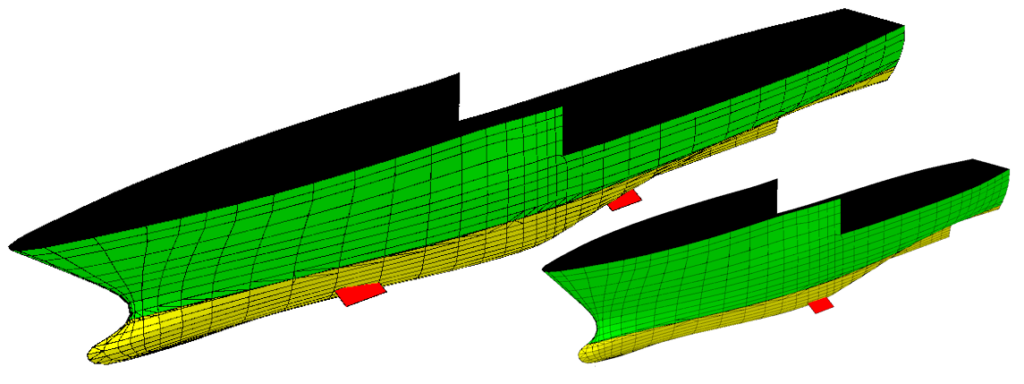
ProteusDS sample seakeeping projects include the Generic Yacht series along with zero speed fin configurations. These fin configurations are inspired by existing commercial products, though they are not intended to replicate the exact performance. The 50m Generic Yacht includes a zero speed fin configuration inspired by CMC Marine LR170 fins. In addition, the 95m Generic Yacht includes several zero speed fin configurations inspired by Quantum Stabilizers QC3600 fins.
Summary
We covered a few points on working with zero speed fin stabilizers, and now it’s time to summarize. Fins with zero speed capability always handle forward speed conditions, too. However, to size zero speed fins, you need some extra information beyond what’s needed for a forward speed application. One of the key parameters you need insight about is actuation power. This is a direct driver of the paddling effect many fins use in a zero speed mode. Sometimes, this can be found from publicly available actuator data. But you have to be careful because seakeeping analysis uses the nominal actuation power during paddling motion, which is somewhat less than the peak actuation power capacity. When there’s no data available, a simple rule of thumb was given in the article so you can get started with a ship motion analysis. Next, you need insight into the fin angle range during paddling. This can be quite different based on the available product, but many use a 35 deg maximum fin displacement, producing a 70 degree sweep. Finally, the fin balance is needed. The balance is the proportion of the fin area in front of the actuator. This is important to know as it affects the hydrodynamic efficiency of the paddling motion. This might be publicly available, but if not, another crude rule of thumb is 17-20%. In a seakeeping tool like ProteusDS, the balance translates into the fin actuator distance from the leading edge.
Thanks
Thank you to SKF Marine and CMC Marine for the helpful pictures of fin stabilizer equipment used in this article.
Next step
Watch this video tutorial takes the ideas from this article and shows you how it is applied in ProteusDS.